Japan Miyadaiku Academy
Japan Miyadaiku Academy
An institution for training miyadaiku. From the fundamentals to the skills of a master carpenter—inherit the secrets of the craft with your own hands.
Across Japan, and on to Europe. Through four academies, we carry the art of the miyadaiku into the future.
Expanding across Japan and into Europe
Four academies: Kanto Headquarters, Tohoku Branch, Kansai Branch, and Europe Branch
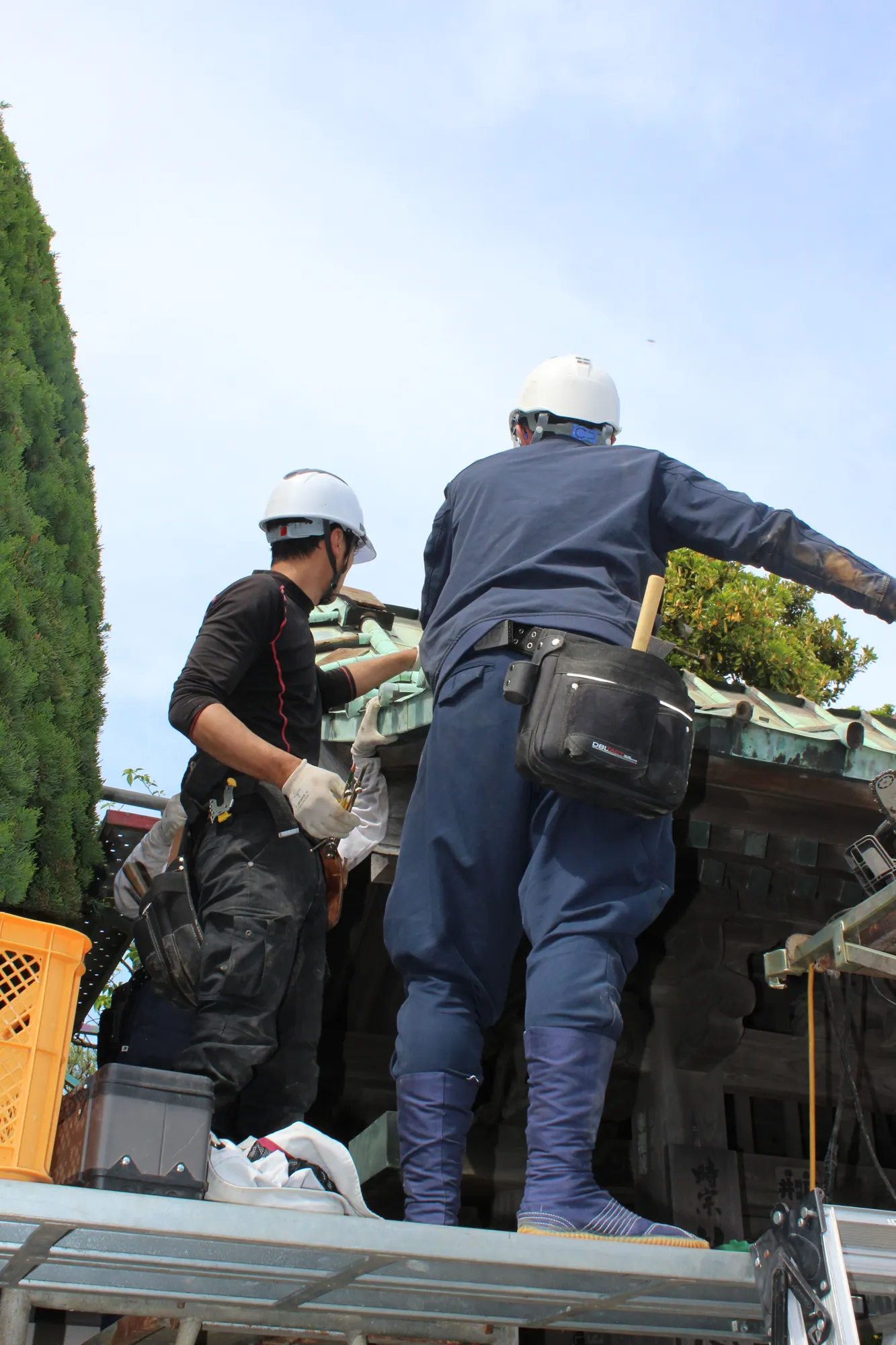
We are expanding our bases for passing on miyadaiku skills across Japan and into Europe. Each academy offers a curriculum and activities rooted in its region, handing down the 1,400-year tradition of temple and shrine architecture to the next generation.
- Nationwide reach from our Kanto base
- Four academies
- Reaching audiences overseas
Japan Campus
01
Kanto Headquarters
Kanto Region
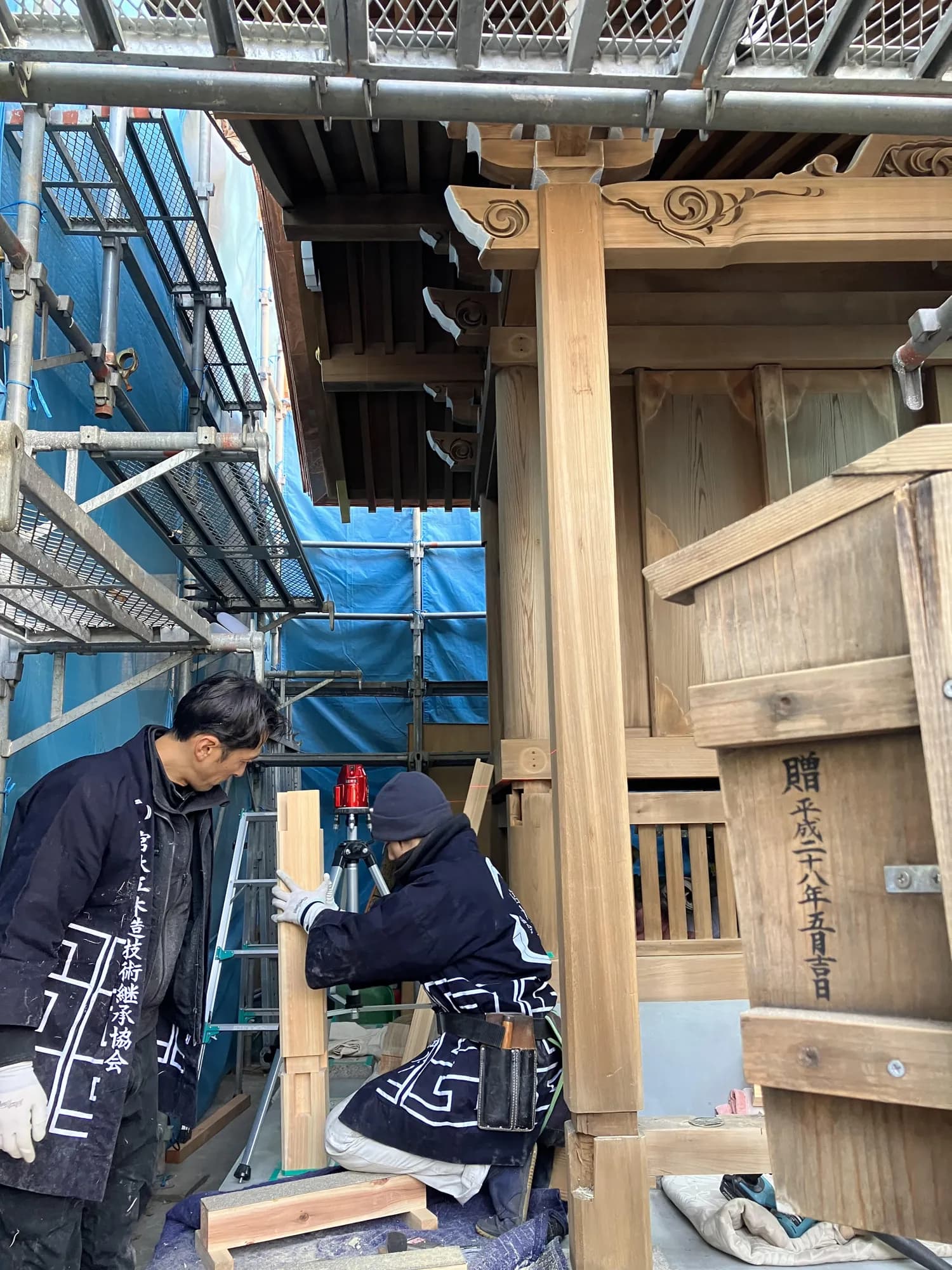
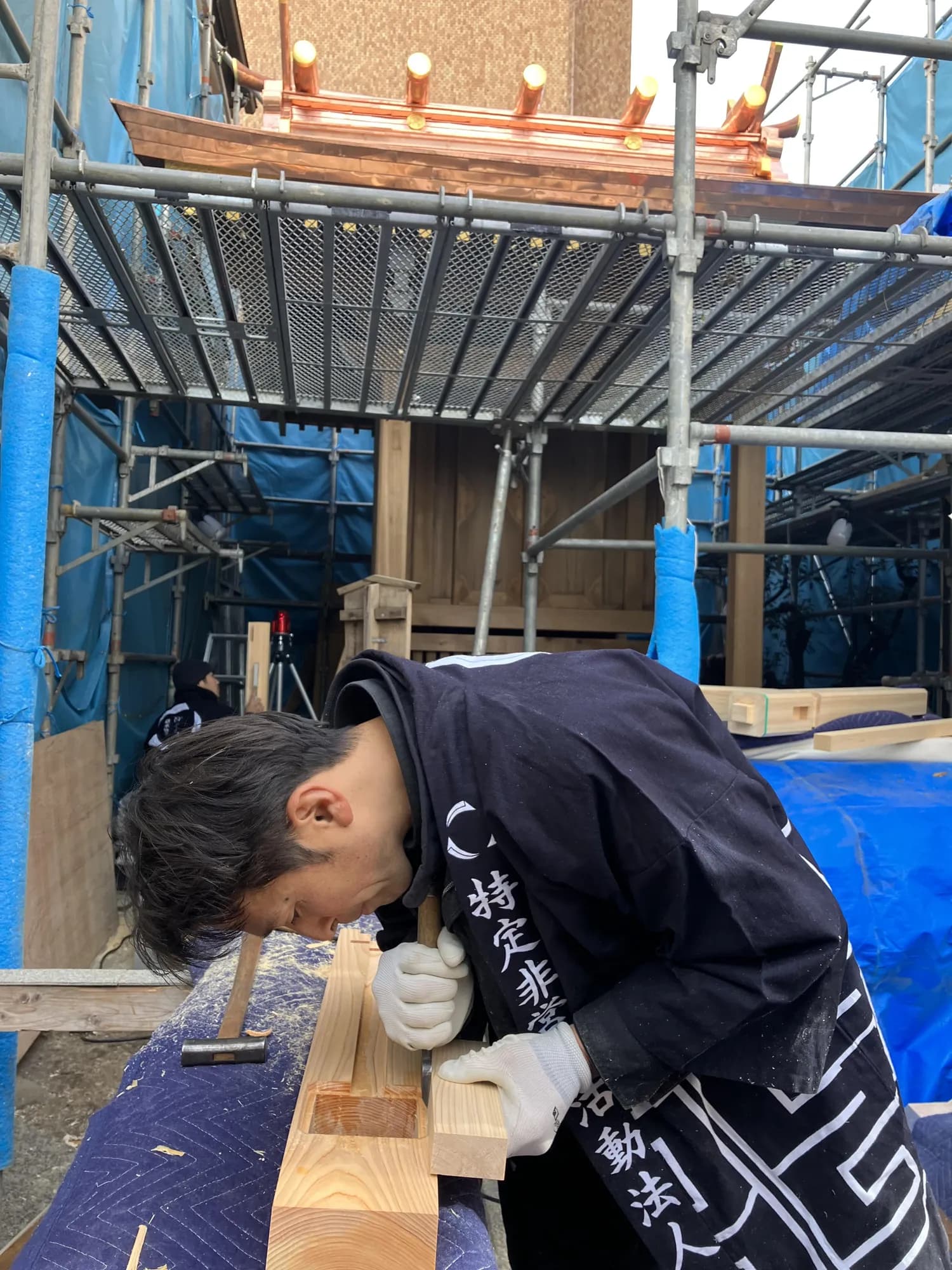
As the headquarters of Japan Miyadaiku Academy, we play a central role in training miyadaiku. We offer every course—Advanced, Master Carpenter, Beginner, Children's Miyadaiku, School for Adults, and e-learning—with direct instruction from practicing miyadaiku.
02
Tohoku Branch
Tohoku Region
Drawing on Tohoku's rich forest resources and traditional architectural culture, we advance both the preservation of local temples and shrines and the training of miyadaiku. Working with local artisans and architects, we pass on skills unique to Tohoku.
03
Kansai Branch
Kansai Region
Centered on Kyoto, the thousand-year capital, we carry on Kansai's traditional architectural culture and miyadaiku skills, pursuing both research into ancient temple and shrine construction techniques and their transmission to the next generation.
Courses
We offer learning programs for a broad range of people, from aspiring miyadaiku to the general public, children, and those wishing to study from overseas. Detailed curricula and the enrollment process are available after logging in.
Advanced Course
Master Carpenter Course
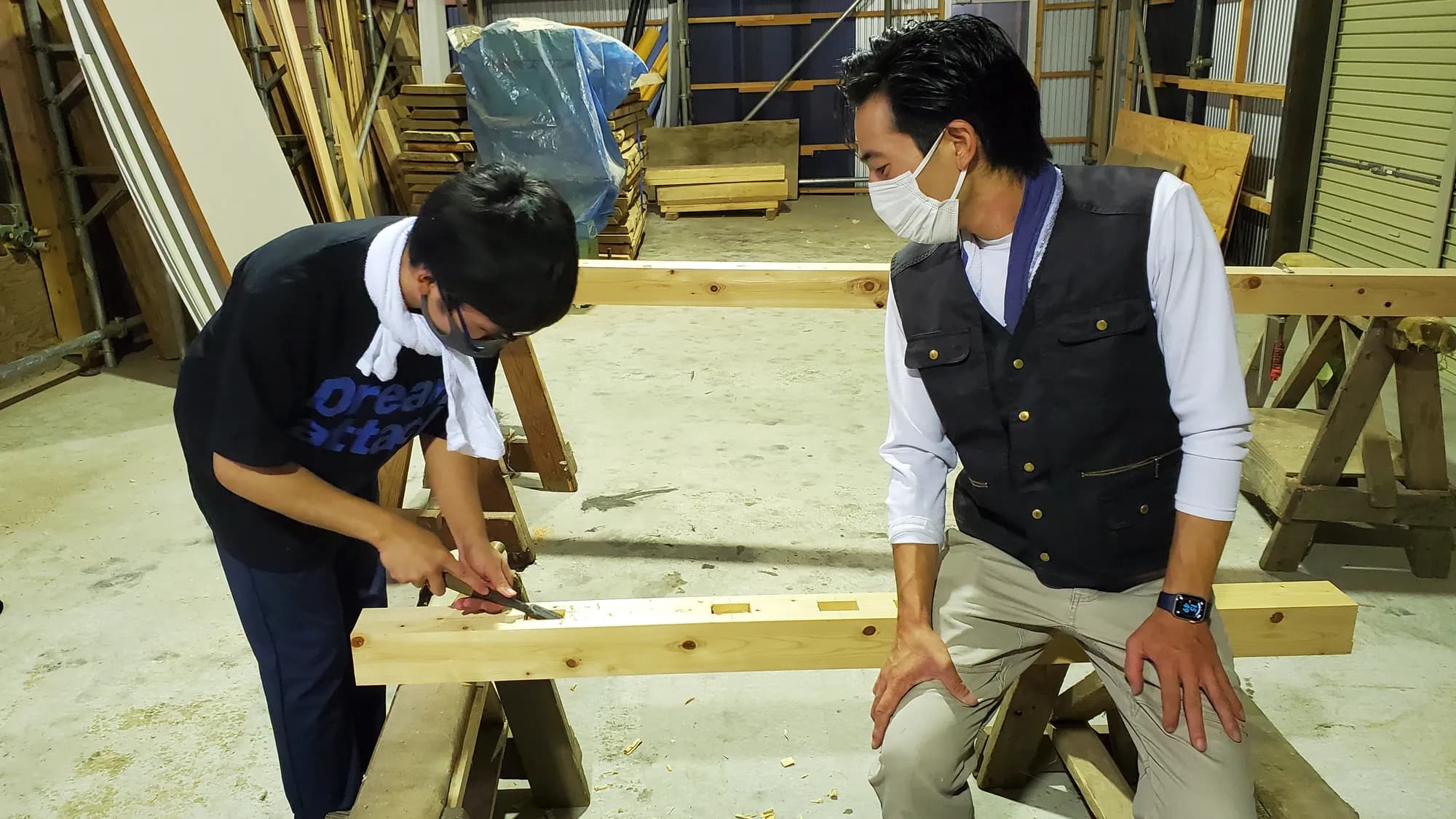
Beginner Course
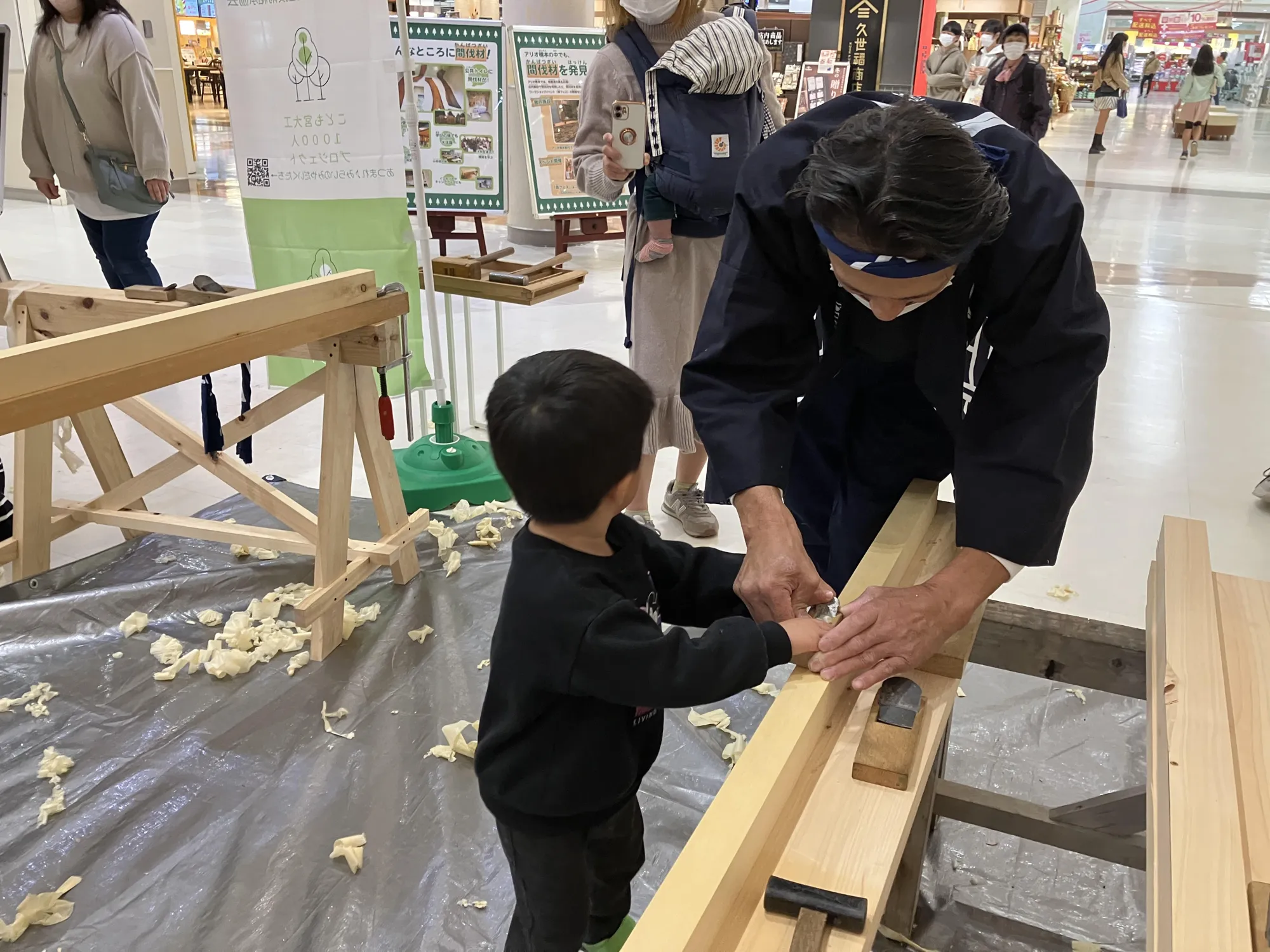
Children's Miyadaiku
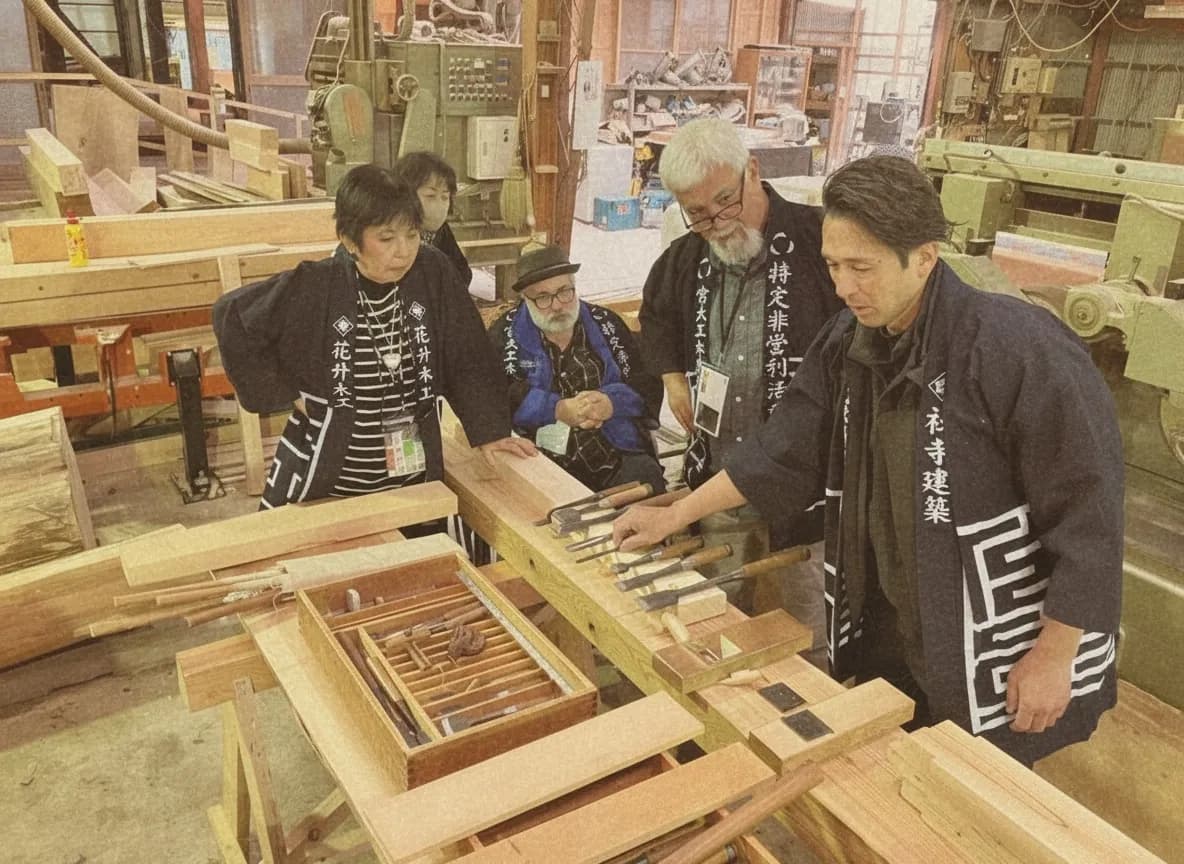
School for Adults
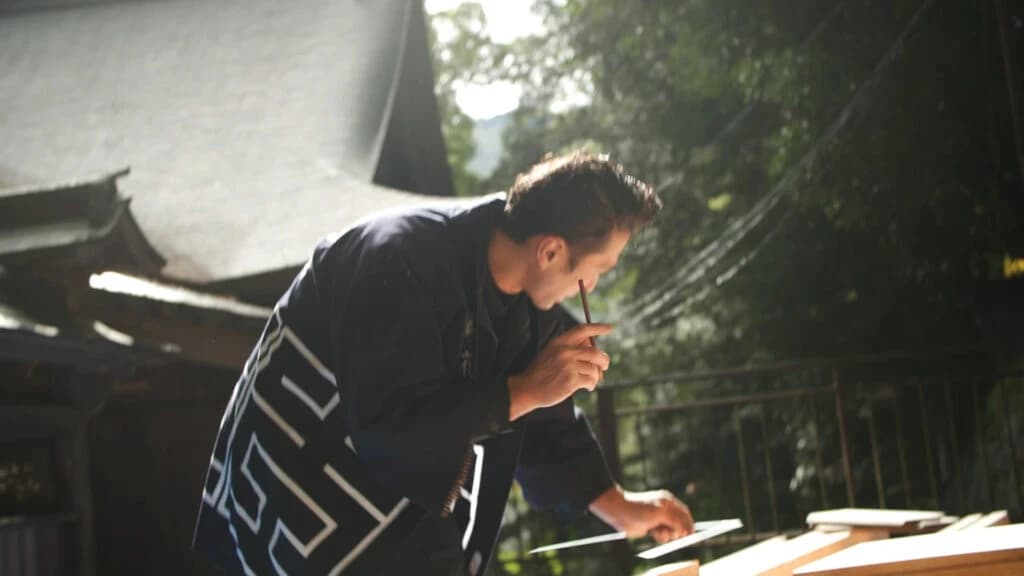
E-Learning
Log in to view full details
Detailed curricula, frequently asked questions, information requests, and all other features are available only to registered users. Please begin with the overview above, and if you are interested, we warmly invite you to register.
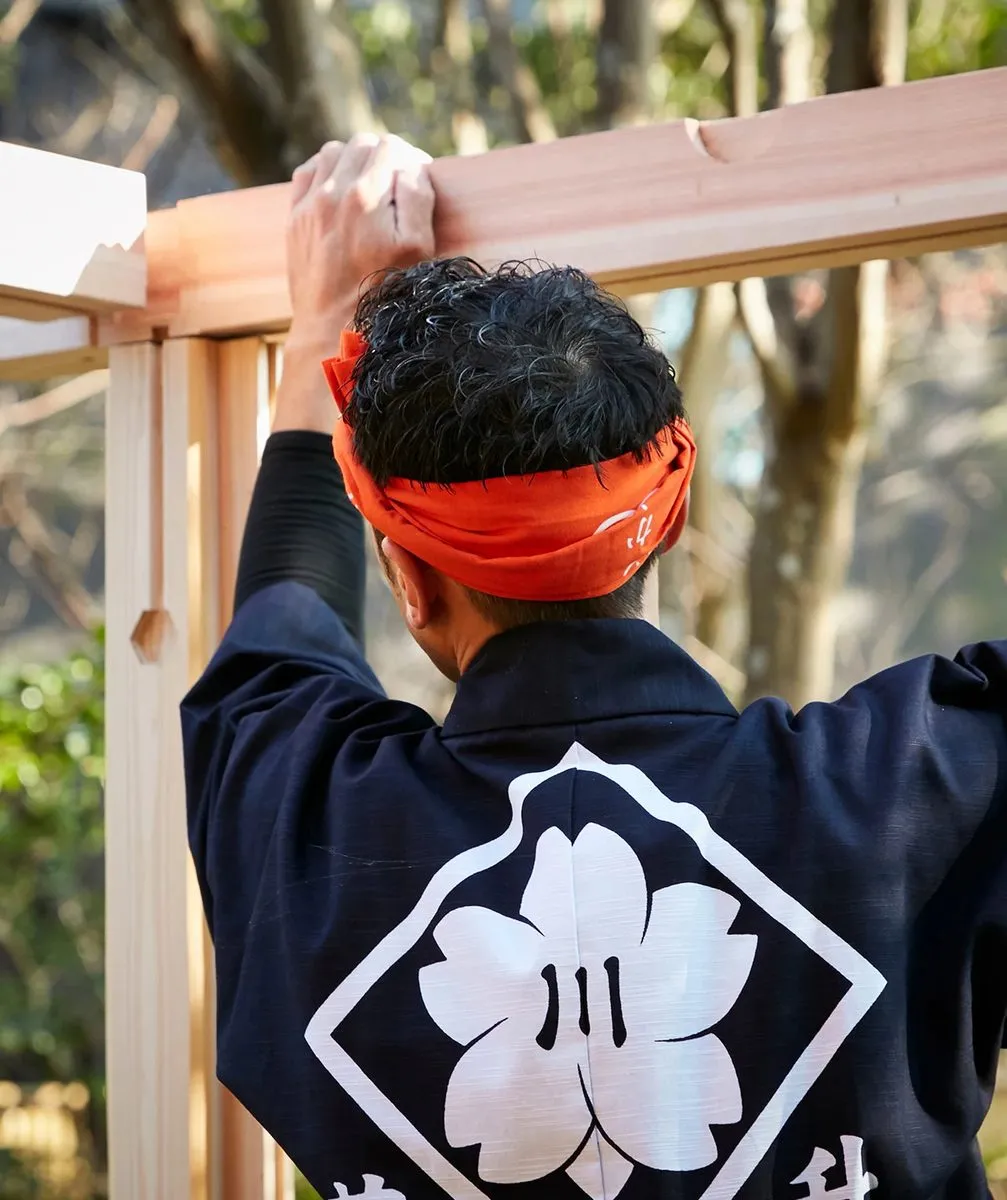
Europe
Japan Miyadaiku Academy — European Campus
FIRST COHORT — APPLICATIONS OPEN
The beauty of Japan becomes your craft.
A new curriculum for learning traditional Japanese timber architecture, based in Europe.
1400years
Of tradition, handed down
7months
To an international qualification
44countries
A craft already at work across Europe
01 · Context
Why Europe is turning to Japanese timber
Record heat across Europe
In recent years, record heatwaves have struck Europe again and again. On 26 June 2026, Norfolk recorded 37.7°C, breaking a June record that had stood for 69 years, and on 24–25 June a red alert — the highest level of warning, declared for only the second time in history — was issued for six regions including London. Cities built of stone hold the heat of the day long into the night, and the heat of the home has become a pressing everyday concern.
Under RE2020, France has written “summer comfort — confort d’été” into the requirements for new buildings. As air conditioning spreads rapidly, renewed attention is turning to a sustainable Japanese approach that draws coolness from the architecture itself, without emitting CO2.
The revival of the timber frame
Last year, Notre-Dame de Paris rose again, together with the oak roof frame long known as “the forest — la forêt”.
Some 2,400 oaks chosen one by one, wooden pegs in place of metal bolts, the medieval side axe used to hew each beam: because the reconstruction employed exactly the techniques of 800 years ago, it led architects and craftspeople across Europe to look once more at timber and the work of the hand.
The Miyadaiku, in the spotlight
The climate challenges Europe now faces, and the rediscovery of traditional conservation techniques: it is where these two currents meet that one Japanese craft has come into focus — that of the miyadaiku, the carpenter of shrines and temples.
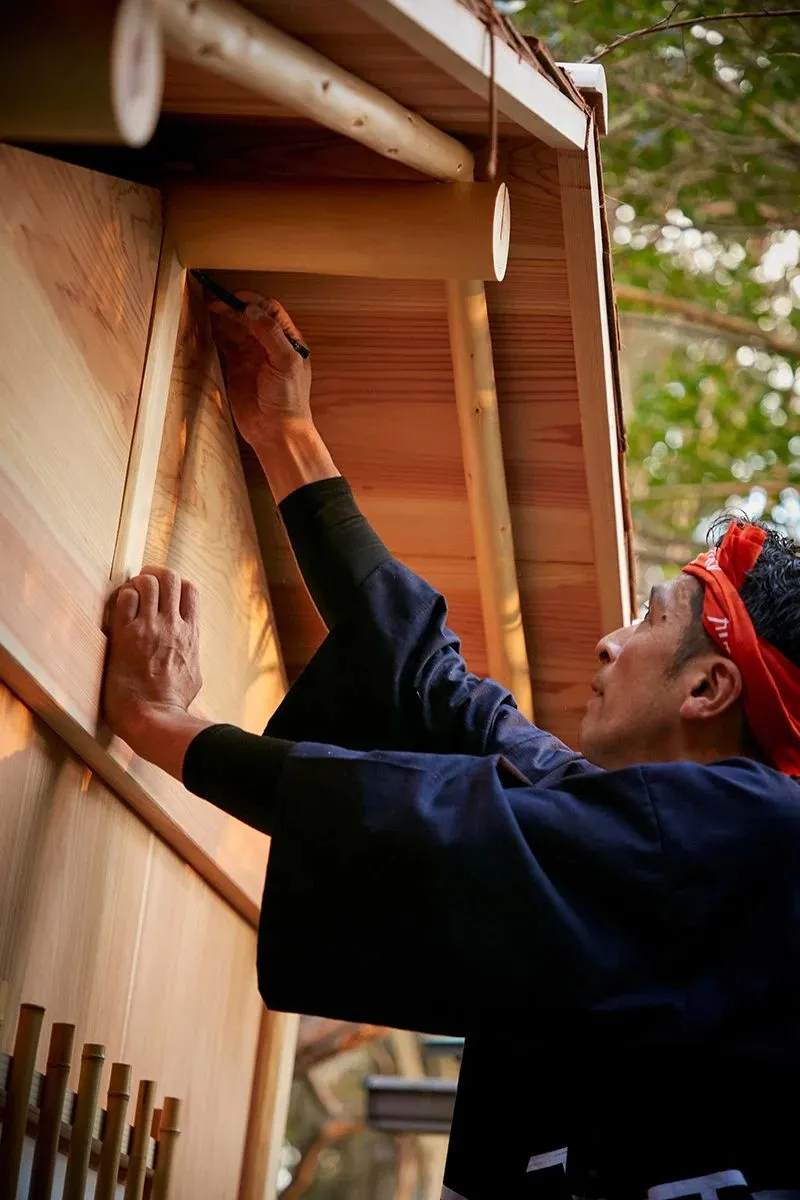
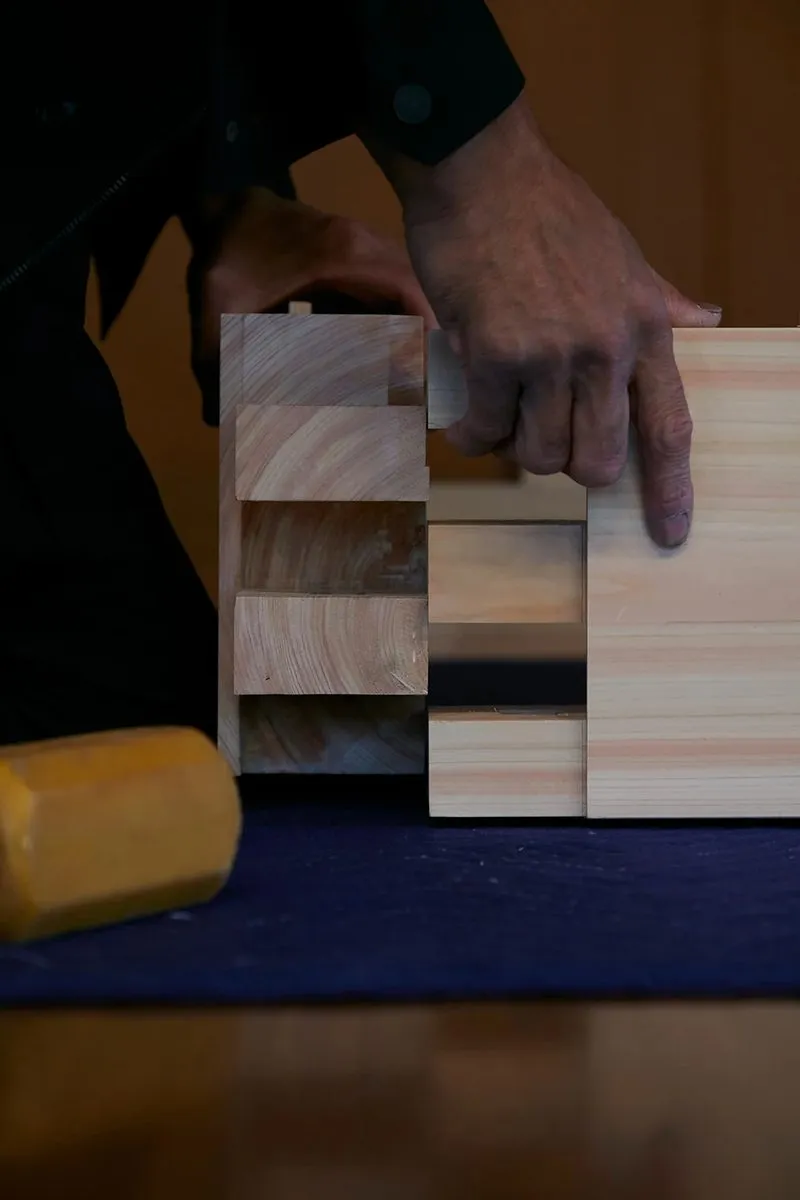
Timber joined to timber, a building raised without a single nail. The craft has crossed 1400 years and lives on today. That the oldest wooden structure in the world stands in Japan, and that so many of its shrines and temples have stood for centuries, is thanks to this craft — passed from master to apprentice, from hand to hand.
Since the Japonisme of the nineteenth century, the “beauty of Japan” has continued to captivate architects and designers the world over: the tea room, the stillness of Zen, the empty space of sukiya. Those spaces are born of the same art of timber. In 2020 the craft was inscribed on UNESCO’s Intangible Cultural Heritage list.
Timber, moreover, does not change temperature, whether touched at the height of summer or the depth of winter. A sheet of steel burns in August and freezes in January; wood stays constant all year round. In a space of timber the perceived temperature falls by more than five degrees — cool in summer, warm in winter, without depending entirely on air conditioning. Here lies the whole of Japanese wisdom.
Answering both the challenge of the climate and the longing for Japanese beauty, the craft of the miyadaiku is needed in Europe now.
That is why we have resolved to carry this transmission to Europe.
02 · The craft
Shrines and temples — the artisan who builds the places the Japanese heart returns to
The miyadaiku is the artisan who builds Japan’s traditional timber architecture — shrines and temples, and also tea rooms and sukiya houses — within a lineage of craftsmen 1400 years old. They create timber structures able to withstand a thousand years of wind and snow, restore those raised centuries ago, and carry their form into the next era. Building and restoring: indispensable to Japanese culture on both counts, it is one of the most honoured of callings.
Always speak with the wood.
Timber carries the “character” given to it by the slope and the sunlight of the mountain where it grew. This is why the miyadaiku faces the wood, reads its character and builds with sure technique while accepting the order of nature. The miyadaiku is a judge of timber — a professional of wood. Beyond the technique lives a single-minded, unclouded heart. Never proud, never overbearing — it is this clear heart that gives rise to beauty of form.
03 · The curriculum
A hybrid format, created for this academy
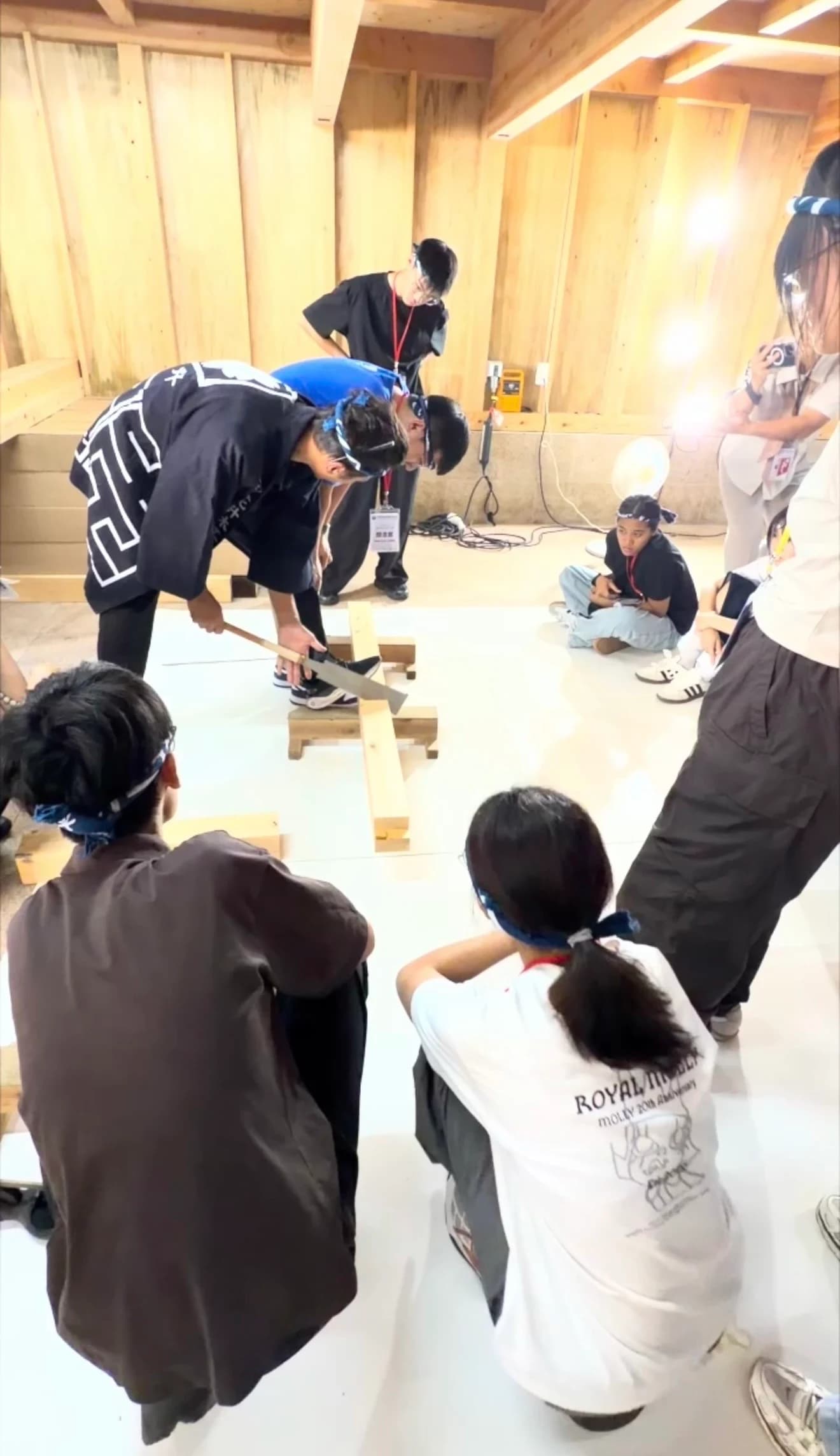
Traditionally, the craft of the miyadaiku demanded “ten years living in the master’s house”. This curriculum instead combines hands-on training in Japan with online study — a hybrid format of our own. Based in Europe, you acquire the essence of miyadaiku technique in about seven months, designed to be put to work on site immediately.
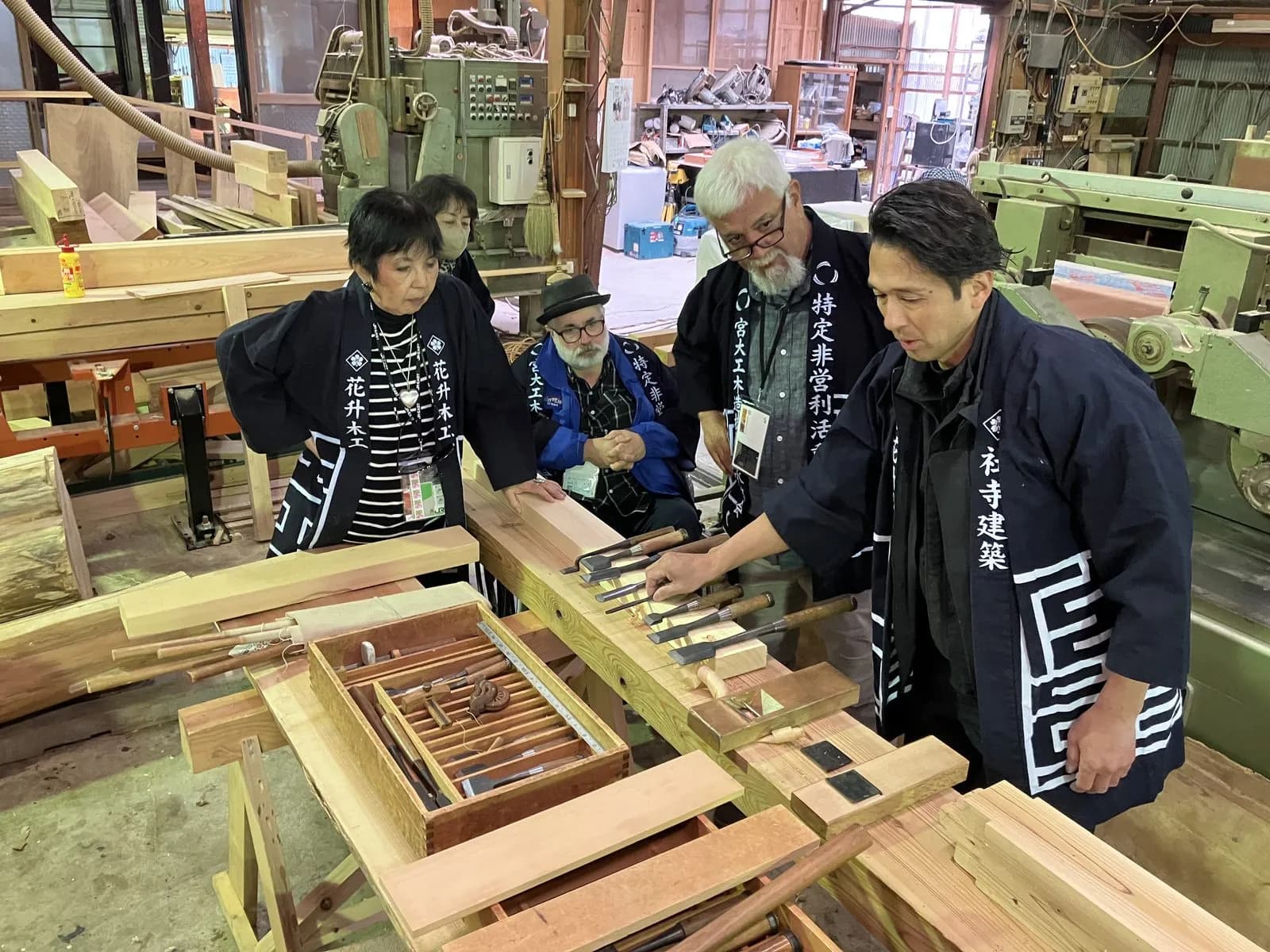
In Japan — hands-on training, about 1 month
From thinning in the watershed forest to hand-cutting in the workshop, and on to a working shrine or temple site. The master carpenter guides each participant closely, and you learn with your own hands.
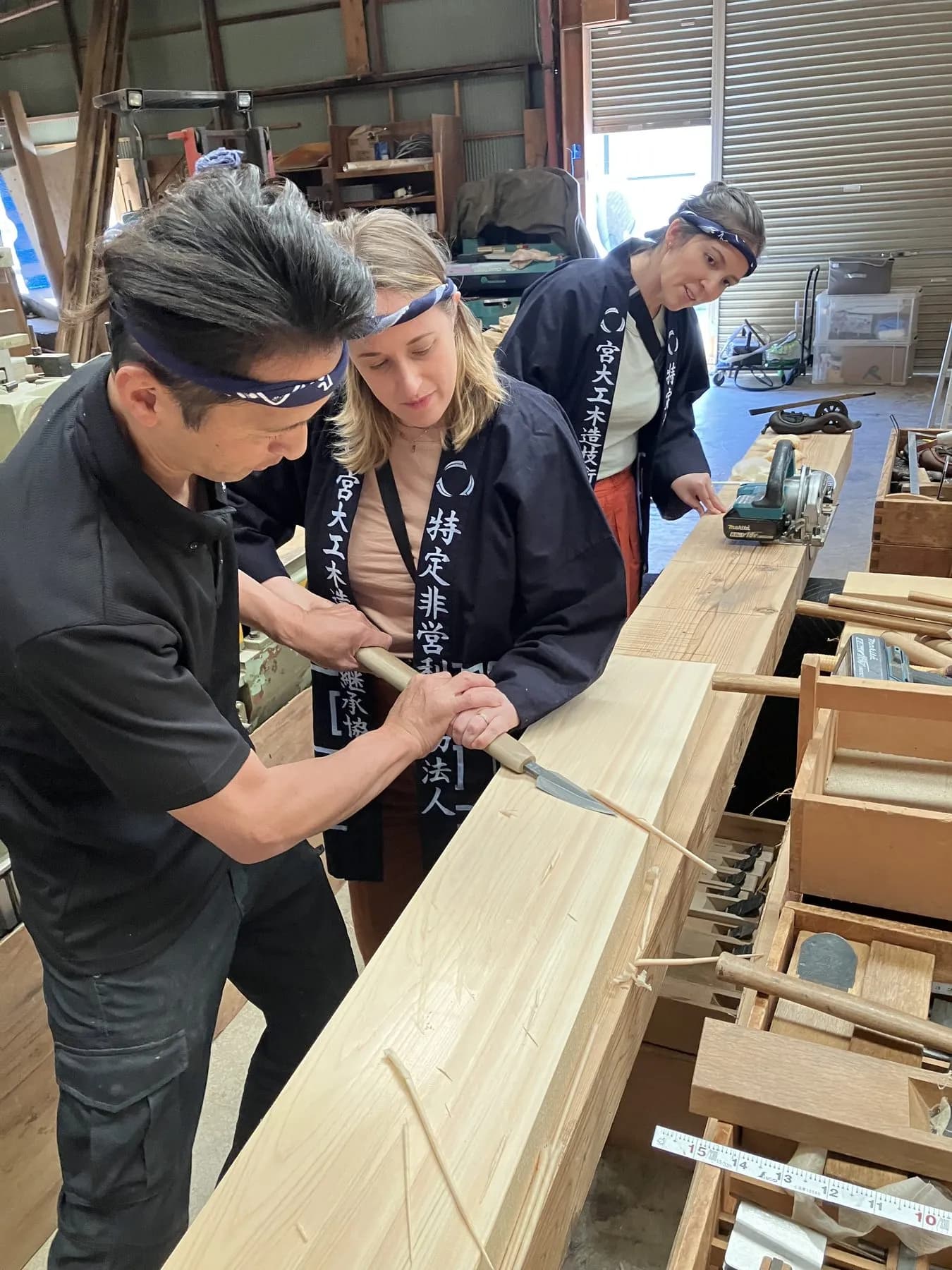
At home — e-learning, about 6 months
Materials that set down a body of knowledge once kept secret allow you to study tool maintenance, marking out, carpenter’s geometry and joinery from your own country. During the e-learning period, a live online practical class led by a miyadaiku is held every two weeks, and every question you raise is answered with care.
Training location — Mainly within Kanagawa Prefecture
Opening ceremony — In the city of Yokohama
Tuition — From $31,500, based on ¥5,000,000. Please write to us for details.
Your stay in Japan is provided entirely free — living alongside the artisans
- Tuition free
- Accommodation free
- Meals free
For the duration of the training in Japan, we arrange accommodation in the town where the workshop stands. Learning while sharing a roof and a table with the master and your fellow students — beyond technique, it is from this shared life that an artisan’s bearing and state of mind are handed down. You experience, in concentrated form, what living in the master’s house once meant.
The master takes each student by the hand.
What you will learn
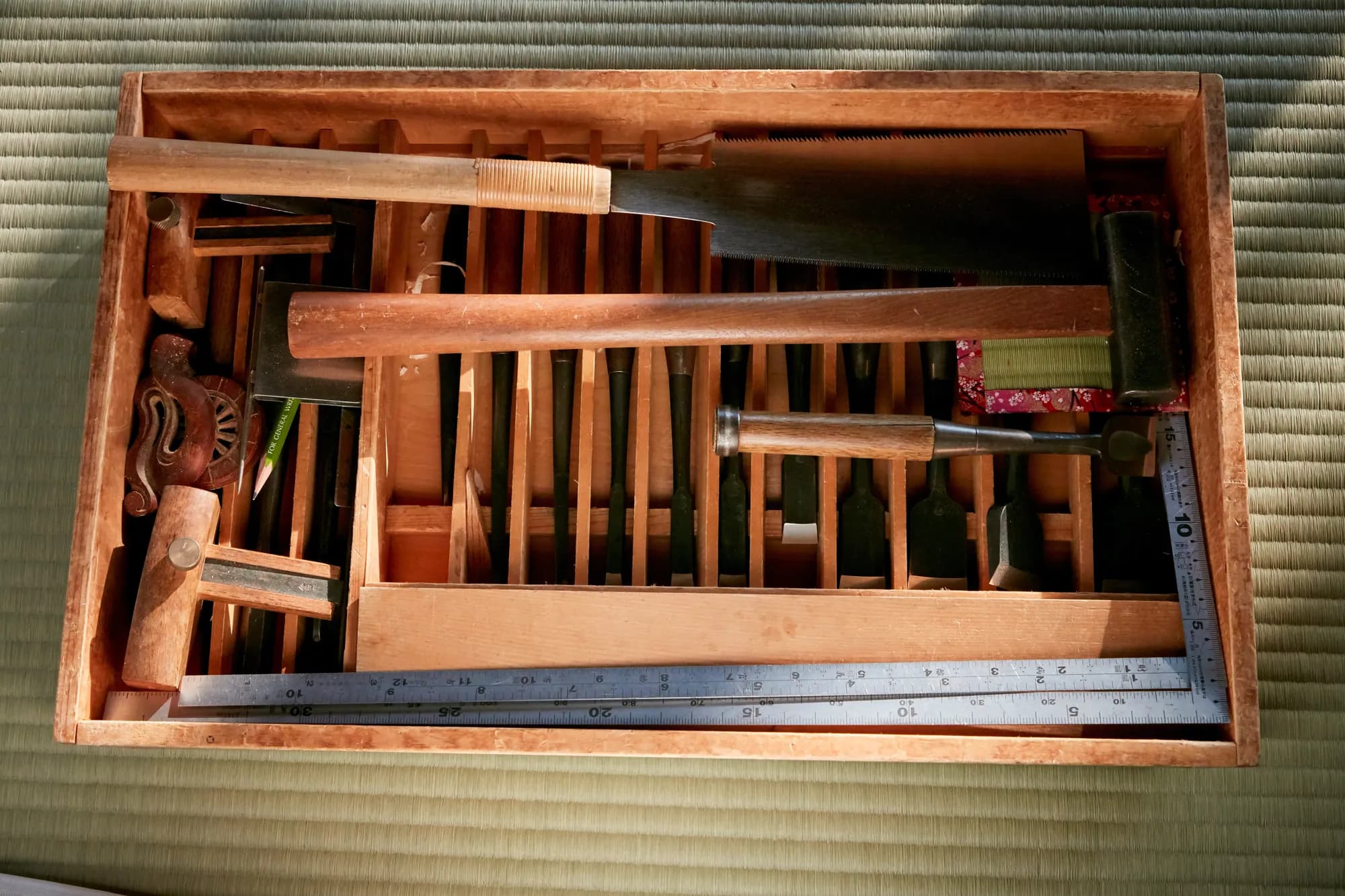
- 01Tools & maintenance
- 02Marking out & carpenter’s geometry
- 03Joinery & frame raising
- 04The spirit of the carpenter
04 · After the diploma
After graduation — many ways to practise
This curriculum does not end with the certificate. On completion you receive the international qualification “Miyadaiku Timber Technician”, and with the backing of the Miyadaiku Timber Craft Heritage Association, which runs the curriculum, you receive support that leads directly to work.
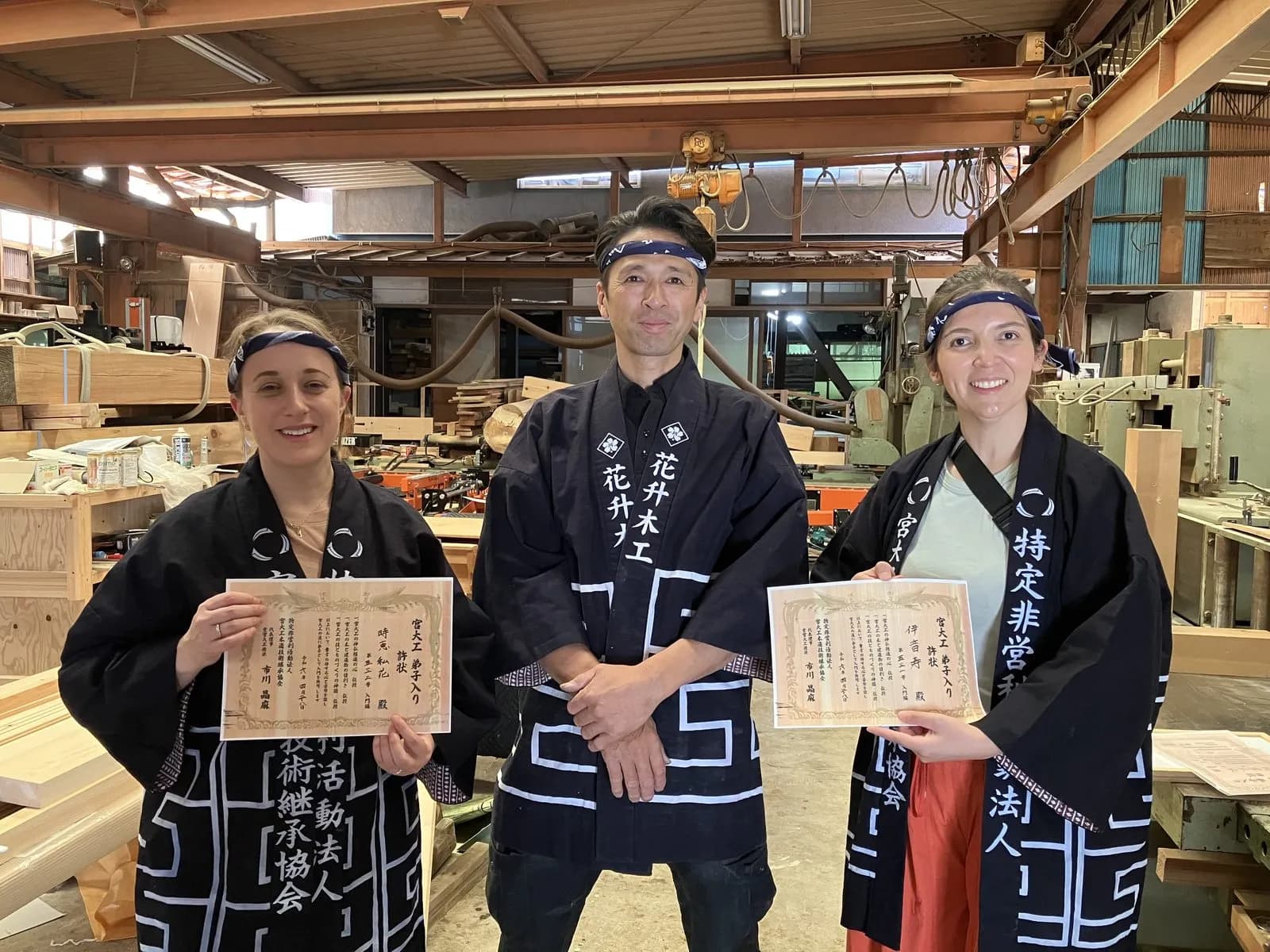
On completing the curriculum you receive the international qualification “Miyadaiku Timber Technician”, certified by the association. Once earned, it is valid for life.
Once the curriculum is complete and the qualification earned, you may register as an official “certified workshop” of the association in your own country. As one of a small number of certified workshops in Europe, you are able to take on and carry out your own commissions: tea rooms, sukiya architecture, shrines and temples, furniture, joinery and heritage restoration. It is, in effect, joining the miyadaiku “franchise”.
The Miyadaiku Timber Craft Heritage Association, which runs the curriculum, already has extensive construction experience in France, the United States and China, and receives numerous architectural commissions — beginning with the “mobile tea room”, which allows a genuine tea room to be raised anywhere. Work won by the association will from now on be entrusted first to graduates of this curriculum, as official certified workshops.
The workshop of the Japan Miyadaiku Academy receives visitors from overseas almost every day, and it is not possible to meet every request. Graduates of this curriculum, as “members of the association”, take part in projects as a priority.
Graduates who have gained experience move to the teaching side as certified instructors. They open a course in their own country and pass the craft to those who follow. The more places there are to learn in Europe, the more surely this craft will reach the next generation.
05 · About us
A recognised institution
The craft of the miyadaiku, and our work, are recognised by Japanese public institutions and internationally alike.
UNESCO
We work with a craft inscribed on the Intangible Cultural Heritage list as “traditional skills in wooden architecture”.
GOVERNMENT-CERTIFIED NPO
A non-profit organisation whose purpose is not profit but the transmission of the craft itself, certified by the Government of Japan.
CABINET OFFICE
Recommended and registered under Cool Japan.
AGENCY FOR CULTURAL AFFAIRS
Selected among the certified projects of fiscal 2021 by the body responsible for Japan’s cultural policy — the equivalent of a ministry of culture.
JETRO
Supported by the Japan External Trade Organization.
ORGANISER
Miyadaiku Timber Craft Heritage Association / Japan Miyadaiku Academy
An educational institution devoted to training miyadaiku and handing down their craft.
PARTNER
Hanamasu Mokko · Shrine & Temple Carpentry
A house of shrine and temple carpentry founded in 1640 — more than 380 years of history.
06 · Admission
Admissions open
The Japanese Academy of Wood · Europe is recruiting students.
This curriculum is by selection. After your application, we will get in touch with you about your entry.
The first step towards that bridge.
American Campus
Related Article
How to Become a Miyadaiku
Can you become a miyadaiku without experience, as a working adult, or as a woman? This article thoroughly explains the three paths—apprenticeship, vocational school, and training institution—along with the qualifications required and the roadmap to becoming a fully fledged craftsman.
Consultation
Toll-free 0120-113-331
TEL 045-326-6009 / info@miyadaiku.or.jp
Hours: 10:00–18:00 (excluding Saturdays, Sundays, and public holidays)